

Licensed
Licensed
3 volumes
By Application Only
Stock Exchange
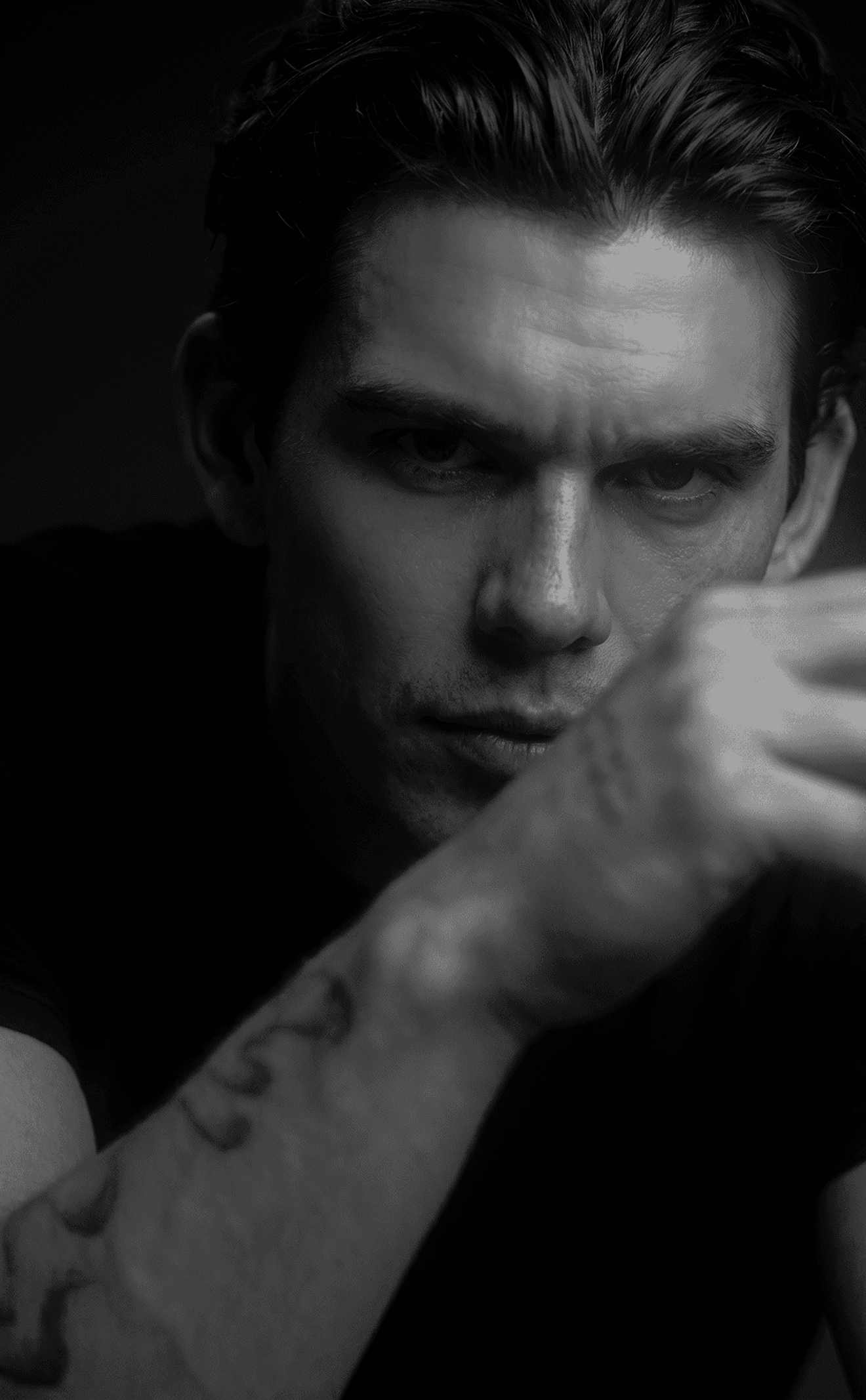
-Max Van der Haagen
If you have spent any time in the markets, you have felt it. The setup was clean. The signal was there. You entered exactly where you were supposed to. And then the price went straight to your stop — and reversed.The feeling did not go away. Because it was not wrong. It was just unresolved. Think about the difference between watching the weather and reading the storm system. A person outside looks at the sky. The clouds move. Rain arrives without warning. To that person, it is unpredictable. A meteorologist is not watching the sky. He is reading the pressure fronts building two hundred miles offshore. The storm was visible long before it arrivedThe retail trader is standing outside watching the sky. Max Van der Haagen learned to read the storm system. The difference is not intelligence. It is access.There is a concept from ancient philosophy that captures this exactly. Plato described prisoners chained in a cave, facing a wall. Their masters walk past a fire behind them, casting shadows on the wall. The prisoners have never seen the real objects — only the shadows. They debate the shadows endlessly. The masters control what walks past the fire. The slaves decode the wall.
The financial markets are the closest thing to that cave that exists in the modern world. Every time you log into your platform and risk your own money — your savings, your hope, your time — you are in the cave. The system is not neutral. It is built to ensure you decode the shadows, not find the exit. You cannot decode an illusion. It is encoded specifically to prevent that. Max found the exit. Not by being smarter than the market. By getting access to what was actually behind it. This page is about what he saw when he turned around.
Read More
E8's institutional-grade trading tool "Market Mode" was built for exactly this. It shows you what kind of market you are actually in — not just what the chart surface is presenting. Most traders find out out after the trade. Market Mode tells you before.

Max Van der Haagen was born in Stockholm. By three, Geneva. By twelve, Amsterdam. Three countries, three currencies — watching his parents convert savings between Swedish krona, Swiss francs, and euros. The question stayed with him: why does money change shape depending on where you are?
His two older sisters followed the expected path — bachelor's, master's, PhD. He respected it. He just could not stay on it. In Dutch there is a word: handel. Trading. He was doing it before he knew it — lining up six hours for Yeezy drops, reselling, always looking for an edge in an exchange. When the 2016-17 signal group era hit — IML, Global Visionaries — he walked through that door like most traders do. The casino dressed as opportunity. He attempted three bachelor's degrees, never finished one. I could have been with OpenAI now, he said about the AI degree he abandoned during COVID. No academic paper. No institutional connection. Just questions the conventional path was not answering — and the willingness to go find the answers somewhere else.
Read More
E8's institutional-grade trading tool "Strategy Builder" was built for exactly this.
It turns a loose trading idea into something structured enough to test and prove — so instincts become edges you can build on, not hunches you keep second-guessing
He had a good job. Well-paying. Stable. He left anyway — told everyone, his girlfriend, his family, his peers — this was the direction. His girlfriend had just had a baby. The first month, he lost a lot of money. His savings. Gone.
It was not just the money. It was the position he had put himself in publicly. He had said where he would be in a year. That year came. He was not there.
That embarrassment — the gap between who you announced yourself to be and where you ended up — is one of the least discussed pressures in trading. It sits in the open position with you. It follows the trade.
Read More
E8's institutional-grade trading tool "Risk Check" was built for exactly this.
It shows you whether your guardrails are still holding in real time — before the session loosens into a bad trade. Size, pace, and discipline on screen, while there is still time to tighten up.
He will not name the brokerage. Large UK firm. What matters is what they showed him: their dealing desk.
Remember the cave. Remember who was behind the fire. This was Max walking behind the fire.
The majority of brokers do not pass your orders to the real market. They process them internally. The trade you place on MetaTrader is not arriving at the CME. It is being handled internally by a mediator against a spread, in a system that has no obligation to reflect what is actually moving at the institutional level.
The FX market turns over eight trillion dollars per day. The entire CFD retail world — every platform combined — is roughly two hundred and twenty million. The retail trader is not in the room where decisions are made. They are reading a delayed reflection on a screen. The stops are not being hunted. The liquidity is being collected. Passive liquidity rests above highs and below lows. Active liquidity goes there to collect it. Once you see the mechanic, you stop being its victim.
Read More
E8's institutional-grade trading tool "Risk Radar" was built for exactly this.
It flags the risk building in your session before a small slide turns into a larger drawdown — the way a meteorologist reads the storm system before the weather shows up on the ground.

Beursplein 5 is the Amsterdam Stock Exchange building, dating to 1918. Amsterdam was for centuries the center of European trade. Everything went digital in the 2000s. Max arrived in 2018. By 2020 he had his own desk — AFM licensed, FCA licensed for direct market access, and 20 years old.
Their names were Peter and Edward — veterans of the open-outcry pits. By the time Max met them they were digital, but they brought every instinct from the pits into how they read a screen. Eight monitors. Four vertical for price ladders. Days spent reading buy-side and sell-side pressure tick by tick.
On the DOM you could see where Edward was — a hundred contracts sitting quietly at an extreme. The whole floor noticed. No indicators. No patterns. Just the weight of capital pressing into a level. The meteorologist reading the pressure system while everyone else watched the sky.
Five years of this became EXODUS — three volumes translating what institutional veterans read on a screen into a framework any serious trader can learn.
Read More
E8's institutional-grade trading tool "The Breakdown" was built for exactly this.
It shows which skill is actually the bottleneck in your trading right now — not which skill needs work in general, but the specific one slowing the payout most. That precision is what separates a trader who improves from one who just stays busy.

Most traders believe the market moves because of news, patterns, candlesticks, indicators. These things exist. They are also downstream. The pattern is the echo. The cause is the liquidity event that preceded it. Most traders study the echo their entire careers.
The meteorologist does not react to the weather. He anticipated it. He saw the storm system two hundred miles offshore. The echo was never the story.
The meteorologist does not react to the weather. He anticipated it. He saw the storm system two hundred miles offshore. The echo was never the story. Above highs, the exchange rate is considered expensive — institutional capital wants to short from there. Below lows, it is considered cheap — institutional capital wants to buy. The price does not move against you because someone is targeting you. It moves there because that is where large capital needs to go to execute at scale. The mark sees the stop taken and feels hunted. The operator sees the liquidity collected. Awareness is the moment the trader crosses from the first group into the second. Before that crossing, no strategy works reliably. After it, the chart starts telling a different story.
This is the foundation of EXODUS — Max's three-volume course translating what he absorbed at the dealing desk and on the exchange floor into something teachable
Read More
E8's institutional-grade trading tool "The Breakdown" was built for exactly this.
It shows which skill is actually the bottleneck in your trading right now — not which skill needs work in general, but the specific one slowing the payout most. That precision is what separates a trader who improves from one who just stays busy.
Volume 1
Liquidity Concepts: What actually moves the market behind the scenes.
Volume 2
Mental Mastery: The edge and calibration to use what you now see.
Volume 3
Flawless Execution: Clear, precise entry models built on structural understanding.
He has a framework for where any trader sits with a recurring mistake. The pothole. First time: not your fault. Second time: you knew the road had one. Third time: you saw it and fell in anyway. Fourth time: you walk around it. Fifth time: you take a different road.
When Max was at the professional desk, there was a risk manager who reviewed everything he did every week. She could see in one session what he could not see across months. For beginners: write down the maximum dollar amount you are willing to lose today. The moment you hit it — screens off. No exceptions.
For intermediates: your data holds the answer. Strike rate, Most Adverse Price, Most Favorable Price, commonalities in losses, windows where damage clusters. Most traders never look.
Read More
E8's institutional-grade trading tool "Drift Meter" was built for exactly this.
It catches you on the third trip. The moment your entries, sizing, or pace start moving away from your rules — before the rule break happens — it flags the drift. The pothole is still ahead. You can still walk around it.


For a period of time Max had one word as the background image on his desktop. Consistency. Not as inspiration. As instruction.
The most common way an intermediate trader destroys gains — tilting without noticing. It takes two forms. First: revenge trading. The trader takes a loss, re-enters to erase it, and trades their ego instead of the market. Second: the compulsion to trade every day. The belief that showing up means clicking. That edge means constant activity. Max's own consistency floor came on the Amsterdam floor with his students — Monday London sessions on M5 without M15 clarity, the same mistake four or five times in a row, his biggest losing streak of that year. He was supposed to be showing them how it was done. Consistency on a losing day is mechanics, not philosophy: fixed loss amount written before the session, two losses maximum before the screen closes. The external guardrail doing the job the internal governor is not yet strong enough to do. You cannot build consistency alone. Willpower is not a sustainable trading strategy. Community is — someone at the same level or slightly ahead, who can see the pothole you cannot see.
Read More
E8's institutional-grade trading tool "Tilt Tracker" was built for exactly this.
It shows where that moment actually began — not the obvious loss, but the trade before it, where the pace changed and frustration first moved into the driver seat. Most traders feel tilt after the damage is done. Tilt Tracker shows the beginning while there is still time to stop it.
He executes on his phone. Not because he is casual — because the analysis is done the night before. By the time the session opens, he is not setting up. He is already set.
At mastery, he starts at half to one percent risk. If the position confirms he adds — trails stop to break even, takes partials, adds the same size again. Exposure never increases. Gain multiplies. Mastery is not the absence of pressure. It is the ability to act independently of it. What changes is not whether the pressure exists — it is whether it is in the decision chair. The four stages are complete. Awareness, Skill, Consistency, Mastery. This is the Performance Factor — the first lever. And it ends here with an honest problem.
Read More
E8's institutional-grade trading tool "Elanor" was built for exactly this.
It reads that beat in real time — watching your entry timing, position size, session pace, and order behavior against your normal pattern. When you are on beat, Elanor confirms it. When the session starts slipping, it catches the signal before the damage shows up in the P&L.
Max started with private capital at 18. By that point he had more institutional context than most retail traders ever get. He was more immune to the numbers on screen than average. tHe still gets thrown.
"The numbers still throw me today. What I would do on my personal account — I'll execute on a much smaller account so I have all my copy behind me."
When the capital at risk is your — when rent, groceries, relationships, and identity are all sitting inside the open position — the trade carries more than the trade. Awareness does not fix that. Skill does not fix that. Consistency does not fix that. The pressure overwrites the training. This is not a character flaw. It is a structural problem. The environment itself is working against the training. What if the environment could remove enough of that pressure to let the training actually do its job? That is the question Lever 2 answers. And that conversation starts below.
Read More
E8's institutional-grade trading tool "Focus Meter" was built for exactly this.
It reads the mental load building in your session — the pace accelerating, decisions getting reactive, clarity narrowing — and tells you when strain is rising toward the point where judgment starts slipping. Not after. While there is still time to slow down, cut size, and reset before pressure finishes making the decisions for you.
Max passed two E8 challenges the day he arrived at E8 HQ. He had failed one earlier account — documented it publicly, switched from fixed to raw spread for his strategy, and recalibrated to the dynamic drawdown. Then it clicked.
What Max recognized in E8's SimFi structure is the same thing he recognized in the Amsterdam exchange floor: the environment shapes the trader. The SimFi environment gives the trader room — to apply the four stages without survival money on the line, to make the mistake, log it, and correct it, to let the Consistency stage produce the repetition volume it actually requires.
The guardrails that most traders resist — the dynamic drawdown, the daily loss limit, the structured evaluation — are the external version of everything Max teaches internally. They are the floor's risk manager. They are the pothole made visible before you fall in it again.
Read More
1
Is the E8 environment a real funded trading account?
No. E8 is a SimFi environment — Simulated Finance — built for education, discipline, evaluation, and performance-based payouts according to program terms. As Max put it: "You're not trading on the real markets. You're performing your edge on a simulated environment — and you're being paid for your performance.
2
What is EXODUS, and is it part of this offer?
EXODUS is Max's three-volume course covering liquidity concepts, mental mastery, and flawless execution. It is the foundation of the Anomaly's Observatory mentorship, which is run separately from E8 and is available by application only. Contact E8 directly for current partnership details.
3
What does the dynamic drawdown mean for someone learning Max's methodology?
Max described it as the most challenging part of his initial E8 experience — and the most ultimately useful. "It replicates how professional funds work with a high-water mark. The people who know how to manage that are really good traders. The people who gamify trading — they don't.
4
How do performance payouts work?
Payouts are performance-based and discretionary according to E8 program terms. They are tied to executing your edge inside the SimFi environment — not to luck or short-term market conditions alone.
5
What instruments can I trade?
E8 One supports Forex, Futures, and Crypto. Max's methodology applies structurally across markets — the framework transfers, the execution model adapts.
E8 operates a simulated trading environment. Performance-based payouts are discretionary and subject to program terms. This isnot a live funded brokerage account. No income is guaranteed. Risk model — EOD or trailing drawdown — is disclosed at account selection. Futures positions liquidate at rollover. Next-day risk uses prior day's closed balance. With user consent, performance data may be used to refine coaching and evaluation parameters.

