Simulated Capital Gave Him the Leverage, But Something Was Missing…
Account size only solved one problem, the next obstacle seemed impossible…until…
E8's SimFi™ model is a simulated environment built for education, discipline, evaluation, and performance-based payouts according to program terms.
That matters because what changed for Tom was not just that more capital existed on paper. It meant he had more room to trade without every position carrying the full weight of the month.
A larger balance can reduce the feeling that every trade has to save you. Clear drawdown boundaries can force cleaner pacing and more respect for risk. A familiar platform can reduce friction. A payout model can connect disciplined execution to a real outcome.
In other words, simulated capital gave him room. The structure helped him use that room well. But room alone does not explain why the curve started moving faster later on. That next part of the story comes after this.
This is the point where many traders ask the most natural question: Why would I need more accounts?
Tom’s data answers that better than any generic pitch ever could.
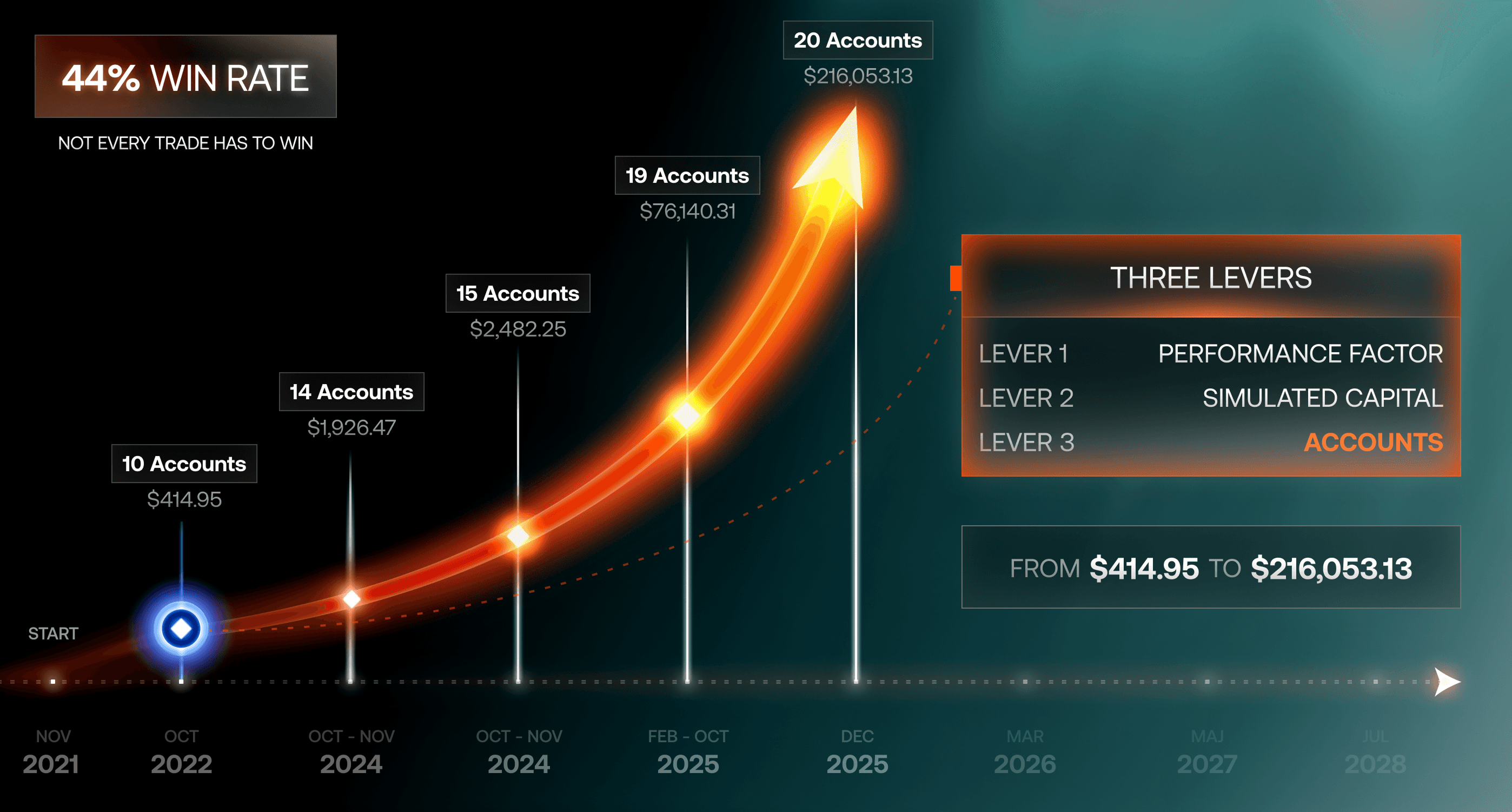
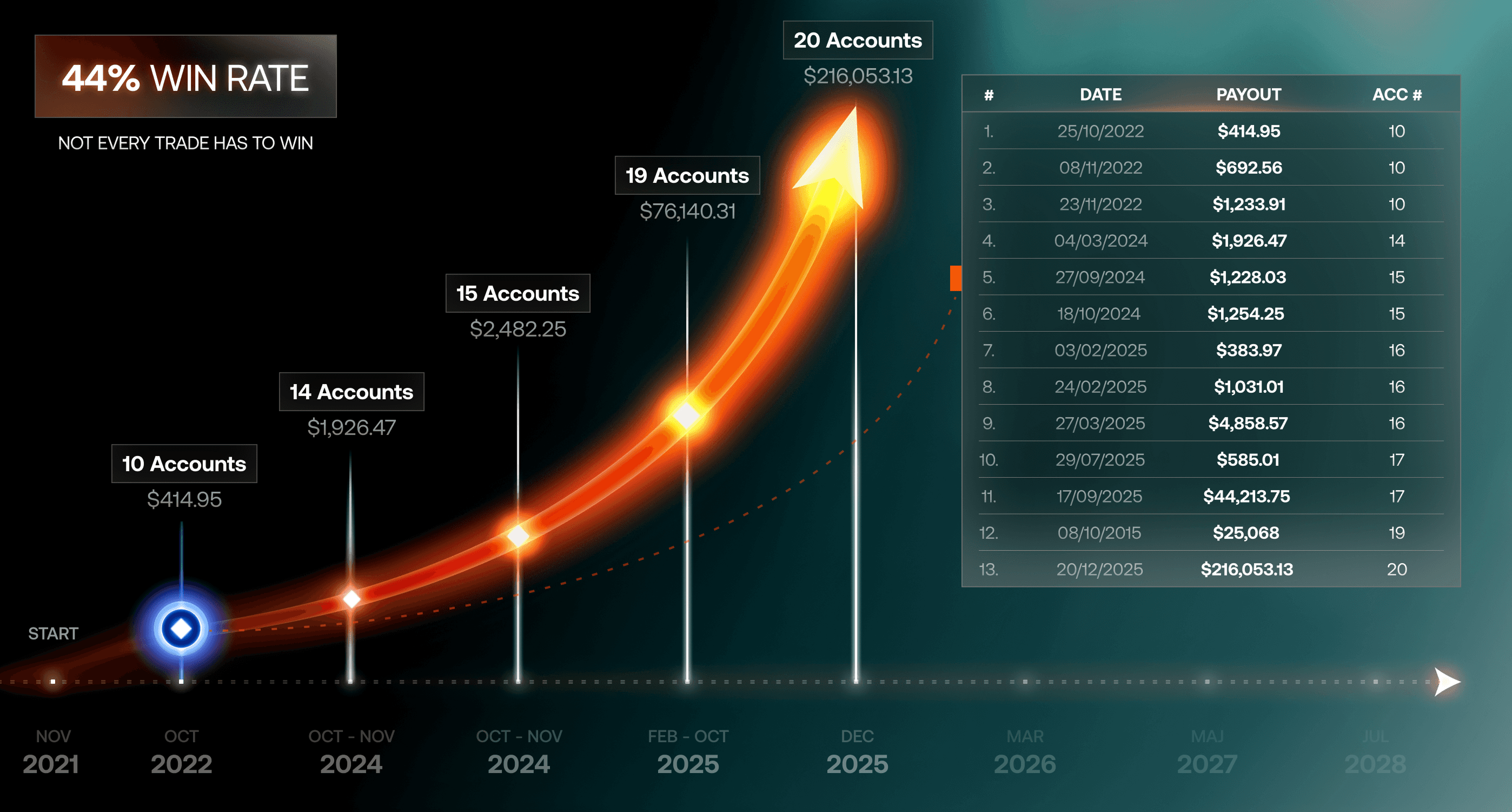
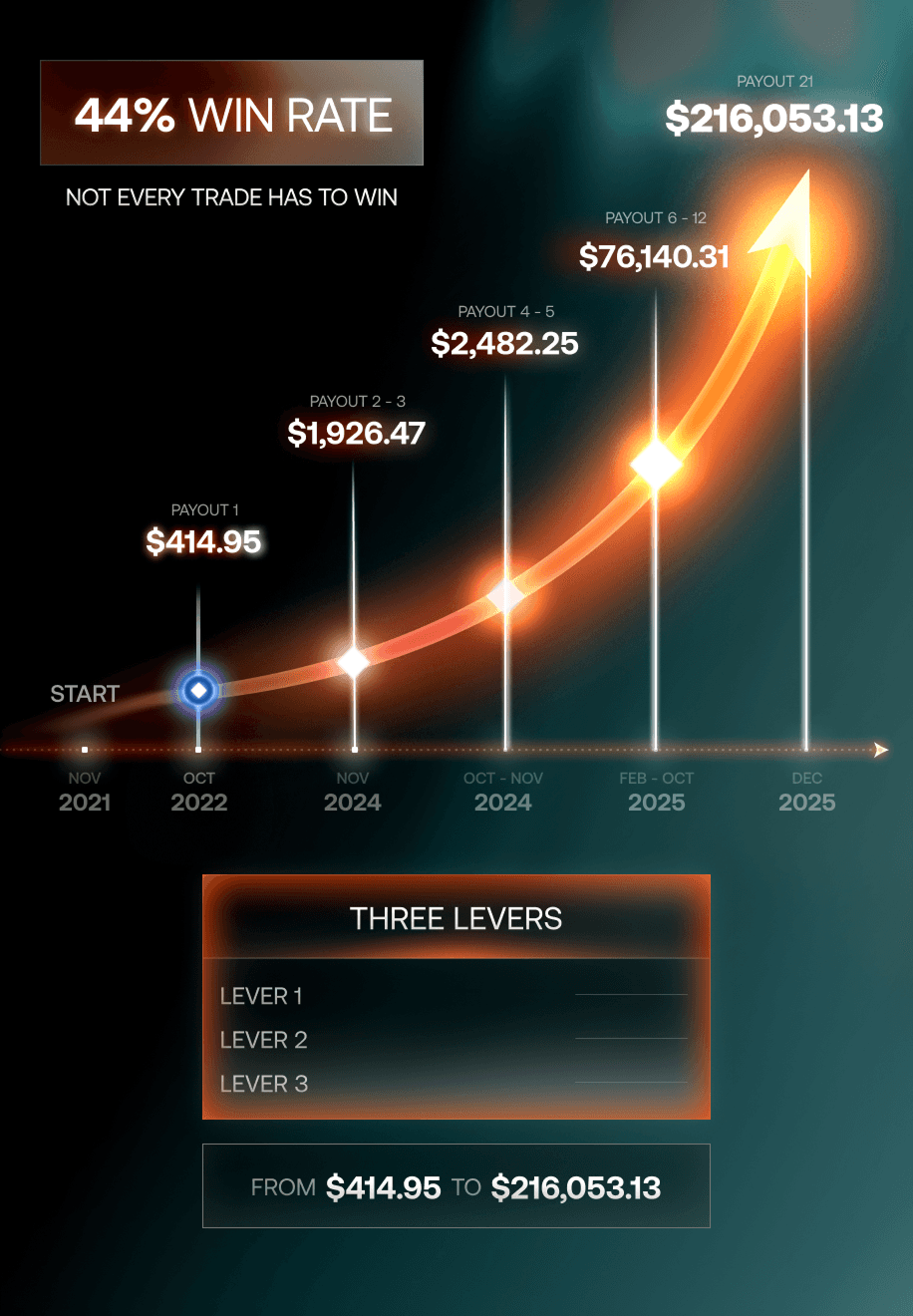
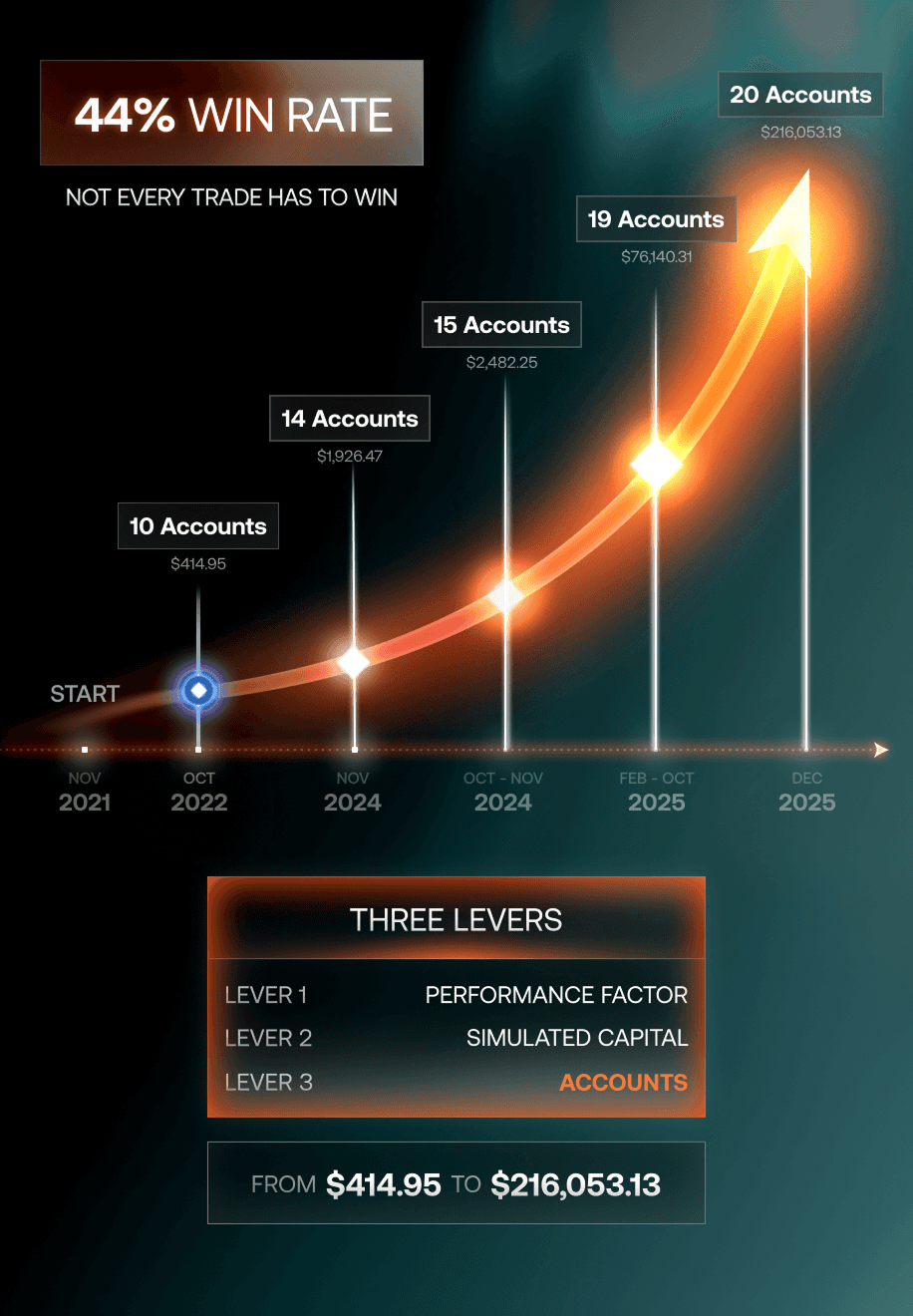
He had to reach 10 SimFi™ Challenge accounts before the first recorded payout of $414.95 arrived.
After that, the pattern started changing.
As he added more accounts, he added more reps inside the same structured environment.
That changed the way he could trade. The pressure to win big on this one trade started coming down. So did the fear of one loss wiping out too much progress. With more room to work, he could stay patient, take cleaner setups, and let the edge play out.
That is what most traders miss about using multiple accounts. It is not about trying to outsmart the market. It is about reducing the pressure behind decisions like: “Do I enter now?” “Do I take this small win?” “Do I cut this here, or let the setup work?”
And once the reps started compounding, the payouts did too. But there is still one more thing to understand about how that compounding worked.
“My payouts multiplied as I bought more accounts.”
How could having more accounts lead to faster results?
The answer is not that more accounts magically create bigger payouts. It is that in Tom's case, more accounts meant more reps inside the same structured environment.
And when those reps were combined with the first two levers — better performance and more capital to work with — the payouts started to scale much faster.
Early on, the effort-to-payout ratio was heavy.
He needed 10 Accounts just to reach the first recorded payout of $414.95. Later, the shape of the journey changed.
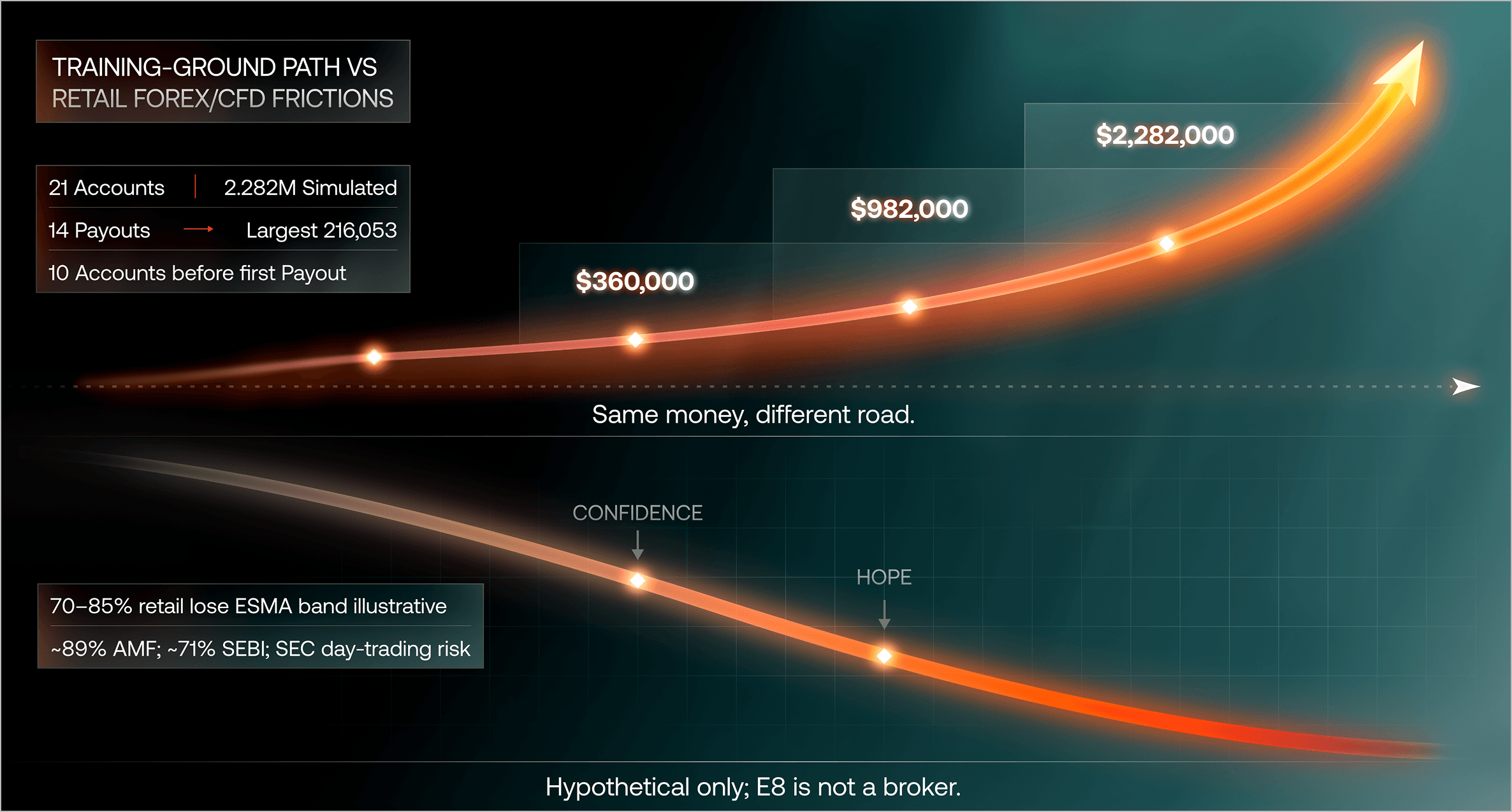
By 14 Accounts, he hit his first $116,000 Six-Figure Payout — about a 280x Increase from where the payout trail began.
By 20 Accounts, that curve had stretched to $216,053.13 — roughly a 520x Increase over the first payout.
That is why the progression stopped looking linear.
And that is why the account count should not be read only as cost.
It should also be read as structured repetition that helped him trade better, stay steadier, and scale harder over time.
What changed was not just the payout size.
What changed was what each new block of reps could produce once the other two levers were already in place.
$414.95 first payout
10 Accounts
$116,000 six-figure
payout
14 Accounts, ~280x
Increase
$216,053.13 payout
20 Accounts, ~520x
Increase
As He Increased Accounts, His Payouts Multiplied.
The Results Only Come Once You Have These Three Factors
The Winning Combination:
PERFORMANCE ENCIRONMENT
SIMULATED CAPITAL
MULTIPLE ACCOUNTS
THE WINNING SETUP:
Product:
E8 One (Forex)
Platform:
MT5
SIMULATED CAPITAL:
$50,000
No commissions
Drawdown:
8%
Performance Payout:
100%
Number of Accounts:
10-20
THE SETUP BROKEN DOWN
E8 One:
This is the setup Tom used, but the bigger lesson is not tied to one market. The change came from process, discipline, patience, and reps that can carry across markets.
E8 SimFi™ Environment:
This is the performance environment where guardrails, feedback, and structure help a trader work on the skill, not just chase the next trade.
$50,000 Simulated Capital:
More room means a trade does not have to save the month. That gives a trader more space to wait, think clearly, and manage risk without forcing decisions.
No Commissions:
Less friction keeps the focus on execution.
8% Drawdown:
A clear boundary forces pacing, cleaner decisions, and more respect for risk.
100% Performance Payout:
The reward stays tied to performance, which makes discipline feel real when it pays.
10-20 accounts:
This is where the third factor matters. One account gives you a shot. Multiple accounts give you reps, more opportunity, and more room for the edge to play out.
PERFORMANCE
SimFi™ CAPITAL
MULTIPLE ACCOUNTS
BIG, CONSISTENT PAYOUTS
Your Missing Edge: His Payouts Grew When His Daily Habits Changed
The strategy mattered. But the daily way he handled pressure, patience, and discipline mattered more.
By the time Tom’s payout profile matured, the routine
underneath it had already changed. That is why discipline cannot be treated like motivation. It has to be treated like something you do.
Gibb’s daily routine at a glance:
Max One Trade Per Day
Execution window (90–120 minutes): max decisions, cool-downs
Post-flight (7 minutes): journal prompt, screenshot, tag edge vs variance
This is what the change looks like once it shows up in daily BEHAVIOR.
And it points back to a bigger truth behind the whole page: a real desk wants consistency with low drawdown. This is retail’s closest runway.
“The strategy is the easy part. The lifestyle is where E8 comes in.”

Six Years Later, His Story Has Changed Forever
Six years later, the story looks completely different. His path was not quick. It was built through pressure, setbacks, patience, self-examination, and discipline. Today, Gibbs talks less about flash and more about freedom — the freedom to stop living inside a life that feels chosen for you instead of by you. But he also says it in a way traders respect: “The money’s great, obviously. But at the end of the day, the money’s like a tool.” He has also talked about using the money to build something more solid, including buying a house.
And even now, he does not talk like someone who thinks the journey is over. “This is the end of the beginning.” Tom uses a Forex setup, but the deeper principles behind his results are not market-specific. The habits that changed his trading — patience, risk discipline, selectivity, and process — can carry across Forex, Futures, and Crypto. That matters because this story is bigger than one market.
It is really about becoming a better operator in whatever market you trade. If you see any part of your own experience in Tom’s story — pressure, inconsistency, self-doubt, the feeling that you are capable of more than your current results show — the question is no longer whether his story is interesting. The question is what kind of environment gives you a better shot at changing your own curve.
You don’t need more leverage. You need the right environment.
HERE’S HOW YOU JOIN
Get an E8 Signature account for 50% off your initial purchase, PLUS 30% off every additional Signature account you buy. This is for traders who want lower risk and steadier progress so they can stay in the game longer.
Get an E8 One account for 40% off your initial purchase, PLUS 30% off every additional E8 One account you buy. This is for traders who want maximum speed and leverage, and are ready to carry the extra responsibility of trading with more capital.
This applies to every account you buy during your time in the club. Once you’re in, you can buy as many accounts as you want at this rate.
One condition… you purchase one account per month to stay in the club.
HERE’S WHAT’S NEXT
step 1: choose your setup
step 2: Pick e8 one or e8 signature*
step 3: Start your simfi™challenge
step 4: Qualify for simfi™ performance payouts
step 5: Earn while developing your skill
You Do Not Need to Force the Next Breakthrough. You Need the Right Conditions for It
Tom’s story is what happened when the trader, the structure, and the repetition finally started working together.
win rate
Before First Payout
repeated payouts
1
Is this a real trading account?
No. E8 is a simulated environment built for education, discipline, and evaluation. It is designed to reflect real market conditions, but it is not a live funded brokerage account.
2
do you fund a live account?
No. E8 is positioned as Simulated Finance (SimFi), with performance-based payouts according to program terms. It is not presented as a live-funded account offer.
3
what’s the difference between eod and trailing?
EOD, or closed-balance, gives more breathing room because it is based on what you keep at the close of the trading day. Trailing, or peak-following, tightens as new equity highs are made, so it tends to feel more reactive and less forgiving.
4
how do payouts work?
Payouts are performance-based and discretionary according to program terms. Payout rails include USD bank transfer or crypto after a one-time $1 wallet verification for crypto rails.
5
what happens if i break a rule?
If a rule is broken, that affects the evaluation according to the specific program structure and risk model. The purpose of the guardrails is feedback that helps train discipline, decision quality, and consistency.
Simulated environment. Performance-based payouts. Name the risk model clearly.
Payout rails: USD bank transfer or crypto .
Futures: positions liquidate at rollover; next-day risk uses prior day’s closed balance.
No income guarantees. No live-funding claims. Use “prop firm” only as comparison language, not as identity.
With user consent, performance data may be analyzed to refine coaching and safeguards; user trades are never marketed as investments.



Connect with tom gibbs